
South-South Cooperation between Portuguese-speaking Countries
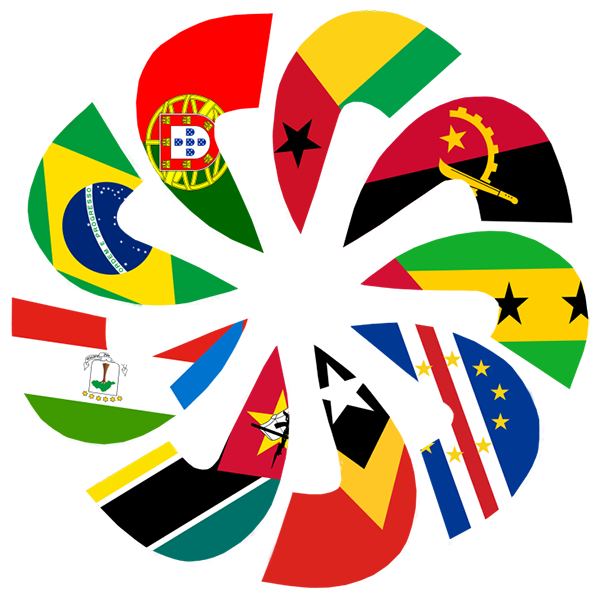
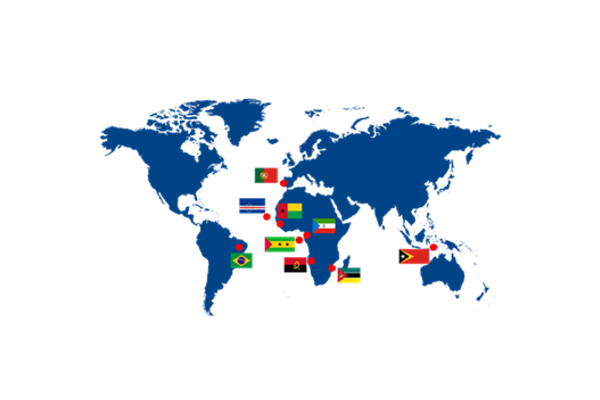
The historical ties between Portuguese-speaking countries began more than 500 years ago, and since then the Portuguese language has been the main common factor of identification among this group of nations, being used in unifying cultural vehicles such as literature, music, and even sports. In the work of Fernando Pessoa, one of the greatest poets of the Portuguese language and of universal literature, we can find a phrase that exemplifies the unifying character and belonging to a community: “My homeland is the Portuguese Language.” This “homeland” now has more than 250 million citizens who have inherited the language and can use it as a vector of comprehension, understanding, and solidarity.
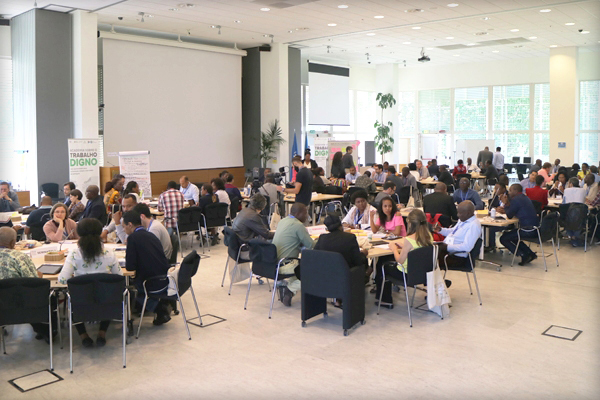
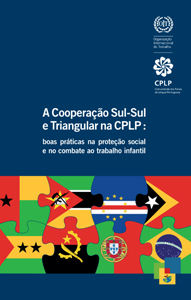
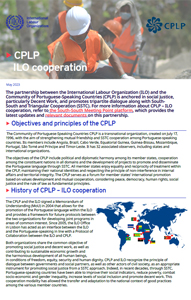
South-South and Triangular Cooperation (SSTC) can help Portuguese-speaking countries advance integrated and coherent policies and actions. Through peer learning, policy dialogue and the exchange and adaptation of practices among countries facing comparable demographic, social and labour-market challenges, SSTC can strengthen the capacity of governments and employers’ and workers’ organizations to develop adequately financed, gender-responsive and rights-based systems grounded in international labour standards and social dialogue. It can also facilitate cooperation on skills development, professionalization, social protection, formalization and the creation of decent employment, while enabling approaches developed in the Global South to inform regional and global policy debates.

Key Resources
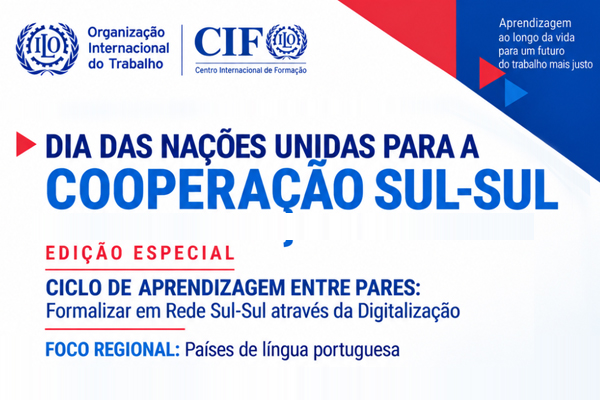
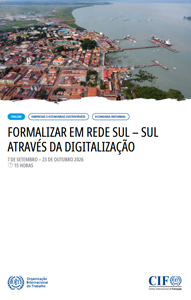
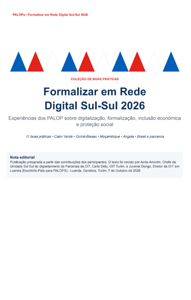
Peer Learning Cycle: Formalizing in South-South Networks through Digitalization
In Portuguese-speaking African countries, reforms regarding formalization, social protection, and digitalization are progressing at a good pace. However, the systems that support them—business registries, social records, digital payments, employment services—remain fragmented and poorly interconnected, and informality persists as a dominant characteristic of the labor markets. At the same time, these countries share similar challenges, similar institutional frameworks, and a common working language. A solution tested in one country does not have to be reinvented in a neighboring country: it must be found, understood, and adapted.
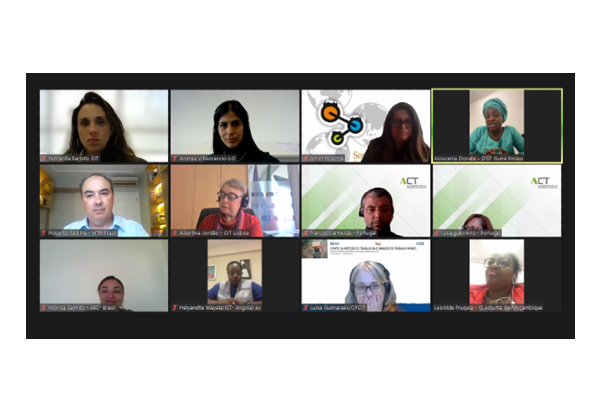
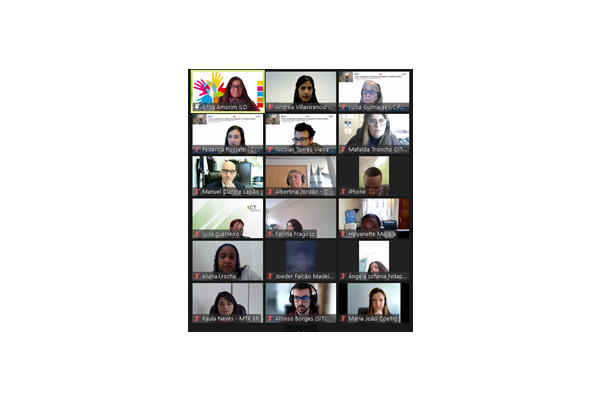
This is what this cycle makes systematic. Over six weeks, ten online sessions bring together the institutions responsible for designing and operating these systems. In each session, an institution presents its own experience; then, a technical clinic addresses the specific problems that the participants bring with them. Each country leaves with an adaptation note — a record of what it learned and what it intends to apply in its context—and the exchange continues after the cycle in a Lusophone Community of Practice.
Discussion Forum: South-South and Triangular Cooperation between Portuguese-speaking Countries
IMPORTANT:
- You can login to the discussion forum with your social media accounts (Facebook, X, Google, Microsoft or Apple) or you can quickly set up a DISQUS account. To learn how to create a Disqus account, watch this video.
- If you want to be notified by e-mail when other people post or reply to your posts, you have to login and click on the option “Subscribe” located at the bottom of the forum.
- This forum is a multilingual interactive space and you are welcome to post in any language you would like.
- This is a moderated space. We welcome respectful, constructive and inclusive exchanges. Hate speech, discriminatory, abusive, threatening or disrespectful content, harassment and personal attacks are not permitted and will be removed. Please protect privacy and do not share personal or confidential information without consent. Repeated or serious breaches may result in restricted access.