
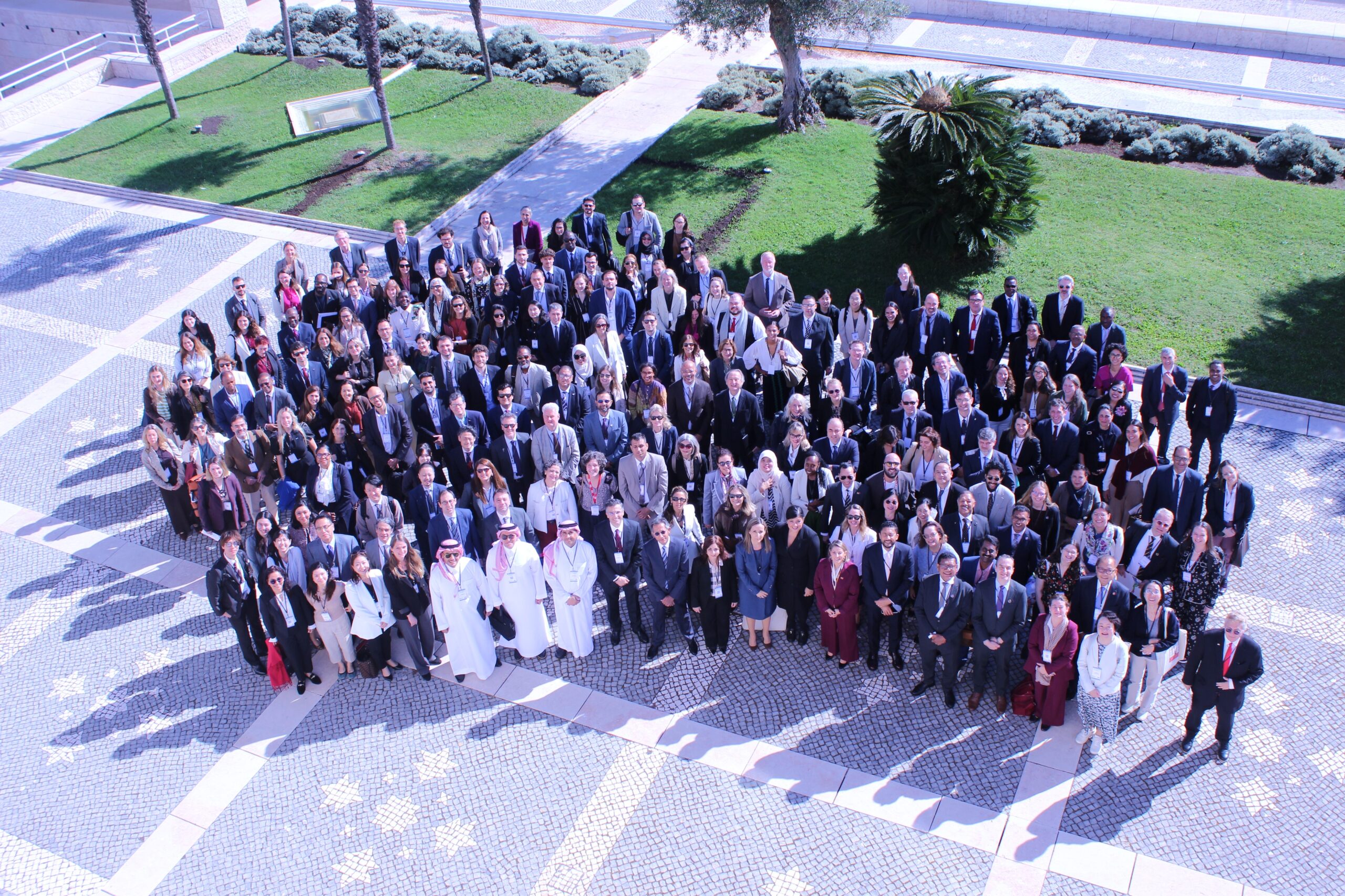
The ILO participated in the 10th International Meeting on Triangular Co-operation, held in Lisbon on 27 October 2026 under the theme “Shaping the Next Decade of Triangular Co-operation: From Evidence to Impact.” The ILO was represented by Mafalda Troncho, Director of the ILO Office in Lisbon, who contributed to the discussions on the role of triangular cooperation in strengthening inclusive partnerships, promoting horizontal knowledge exchange and translating locally generated solutions into sustainable policy and institutional outcomes.
A key contribution from the ILO focused on placing people and local knowledge at the centre of development partnerships. Drawing on the ILO’s tripartite mandate, the intervention emphasized that effective partnerships must go beyond institutional coordination to ensure the meaningful participation of governments, employers’ and workers’ organizations, local authorities and communities. Social dialogue was highlighted as an essential mechanism for reconciling different interests, building consensus and ensuring local ownership of cooperation initiatives.
The ILO also stressed the importance of moving from the transfer of knowledge towards its co-production and mutual adaptation. Examples from the ILO’s work illustrated how SSTC can connect local innovation with national policies and regional cooperation. These included cooperation among Portuguese-speaking countries (CPLP) in areas such as labour inspection, child labour, economic formalization and social protection; the newly established Lusophone Community of Practice, launched by the ILO and ITCILO, focusing on enterprise formalization and digital social protection; and the Regional Initiative for Latin America and the Caribbean for Combating Child Labour.
In discussing how triangular cooperation can remove barriers to innovation and knowledge exchange, the ILO identified three priorities: investing in sustained learning ecosystems and communities of practice rather than relying exclusively on time-bound projects; prioritizing the adaptation of successful practices to local contexts rather than their mechanical replication; and assessing the quality and sustainability of partnerships alongside conventional sectoral results. Examples included triangular cooperation between Madagascar, Kenya and France to promote decent work in horticultural export value chains, as well as exchanges between Arab and Asian countries on employment creation through climate-resilient investments.
The ILO’s contribution concluded with a call for cooperation agencies to invest in networks and communities of practice, support local experimentation and peer learning, measure institutional strengthening and social dialogue, and ensure the participation of employers’ and workers’ organizations from the design stage of cooperation initiatives.
The ILO also contributed to Session “The Role of Triangular Partnerships in Navigating Digital Transformation and Digital Sovereignty,” held on 27 October. The session explored how triangular partnerships can help countries address the dual challenge of rapidly developing inclusive digital public services and interoperable data architectures while safeguarding long-term digital sovereignty and avoiding technological dependencies and vendor lock-in.
Overall, the ILO’s participation reinforced the relevance of its distinctive tripartite approach to triangular cooperation and its potential to connect institutional capacities, technical resources and local knowledge. The central message was that sustainable cooperation should not simply deliver solutions to communities, but rather recognize communities, workers and local enterprises as partners and co-creators of knowledge. By connecting local innovation with peer learning, institutional capacity development and policy processes, SSTC can serve as a bridge between local experience, national priorities and international cooperation, helping turn shared knowledge into concrete and lasting results for people.