
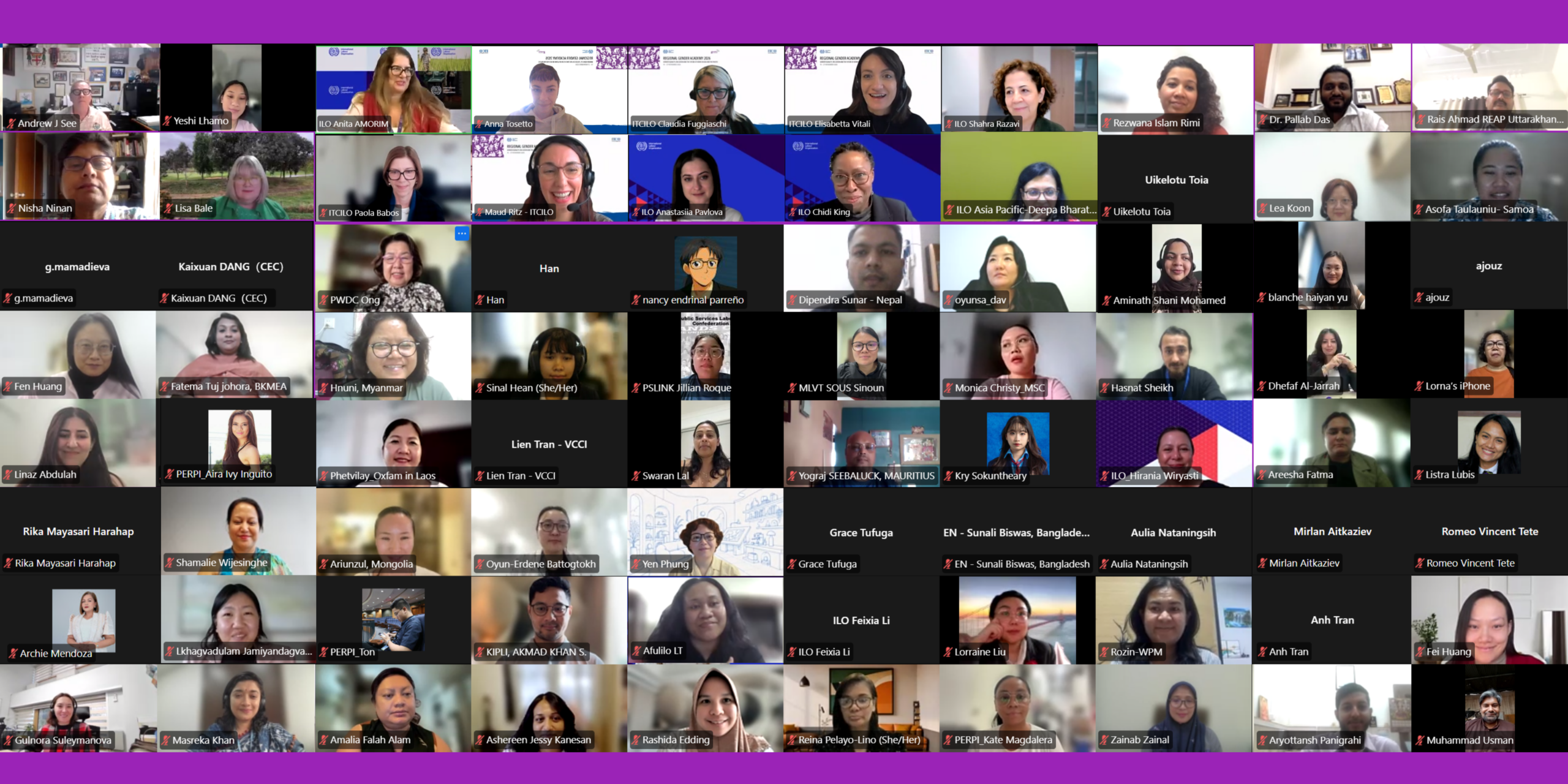
ILO partnerships support more than 30 scholarships for participants from the Global South, fostering knowledge exchange, capacity development and the sharing of good practices on gender equality.
GENEVA / TURIN – 16 November 2026 – The International Labour Organization (ILO), through its International Training Centre in Turin (ITCILO), has brought together participants from across Asia and the Pacific for the Regional Gender Academy, reaffirming its commitment to advancing gender equality through capacity development, international partnerships and South-South and triangular cooperation (SSTC).
The Academy was opened by Shahra Razavi, Director of the ILO Protection Department, together with Paola Babos, ITCILO Deputy Director, and Anita Amorim, Head Emerging South-South and Special Partnerships Unit ILO.
The opening session highlighted the importance of translating international commitments on gender equality into concrete policies and practices, while strengthening cooperation among countries and institutions in the Global South.
Advancing the ILO’s transformative agenda for gender equality
In her keynote presentation, Shahra Razavi outlined the ILO’s transformative agenda for gender equality, building on the Resolution adopted by the International Labour Conference in 2026.
Her intervention emphasized the need for ambitious, coordinated and sustained action to address structural inequalities in the world of work and accelerate progress towards substantive gender equality.
The Academy provides an opportunity to translate this global agenda into regional and national action by strengthening the knowledge, skills and institutional capacities of participants working on gender equality and decent work.
Chidi King, Chief of the ILO’s Gender, Equality, Diversity, and Inclusion Branch, provided a substantive overview of the ILO’s transformative agenda for gender equality in the world of work, examining persistent gender gaps, structural barriers and discriminatory norms, and highlighting the integrated policy approaches needed to achieve lasting chang.
Partnerships expand access to learning and South-South cooperation
A key feature of the Academy is the contribution of ILO partnerships, which have supported more than 30 scholarships for participants from the Global South.
These scholarships are enabling participants to benefit from specialized training, exchange experiences and develop good practices on gender equality through South-South cooperation, with a particular focus on Asia and the Pacific.
The initiative demonstrates the added value of partnerships in expanding access to high-quality learning opportunities and promoting the exchange of practical solutions among countries facing similar development challenges.
By bringing together diverse experiences and approaches, the Academy aims to strengthen regional networks and encourage the adaptation and replication of successful gender equality initiatives.
Strengthening the role of South-South and triangular cooperation
During the opening session, representatives of the International Training Centre of the ILO in Turin reaffirmed the Centre’s commitment to gender equality and South-South and triangular cooperation as complementary priorities in its capacity-development work.
South-South and triangular cooperation offers important opportunities for countries to learn from one another, share policy innovations and develop context-specific solutions to common challenges.
Through peer learning, knowledge exchange and collaborative approaches, the Regional Gender Academy seeks to support participants in identifying and documenting promising practices that can inform policies, programmes and institutional action across the region.
Connecting global commitments with regional action
The Regional Gender Academy illustrates how the ILO’s normative and policy frameworks, technical expertise, capacity-development activities and partnerships can work together to advance gender equality.
By connecting the ILO’s transformative agenda with regional experiences and South-South cooperation, the initiative contributes to building stronger institutional capacities and more inclusive approaches to decent work.
The Academy also reinforces the importance of collaboration between the ILO, its International Training Centre and development partners in mobilizing resources, sharing expertise and expanding opportunities for learning.
The initiative reflects a shared commitment to ensuring that international cooperation delivers tangible results for gender equality, while recognizing countries of the Global South as important sources of knowledge, innovation and solutions.