
Geneva, 29 September 2026 – The International Labour Organization (ILO) and the International Training Centre of the ILO (ITCILO) have launched the BRICS South-South and Triangular Cooperation Knowledge Series, marking International Day of South-South Cooperation with a new platform for peer learning, knowledge exchange and practical cooperation among BRICS countries and partners from the Global South.
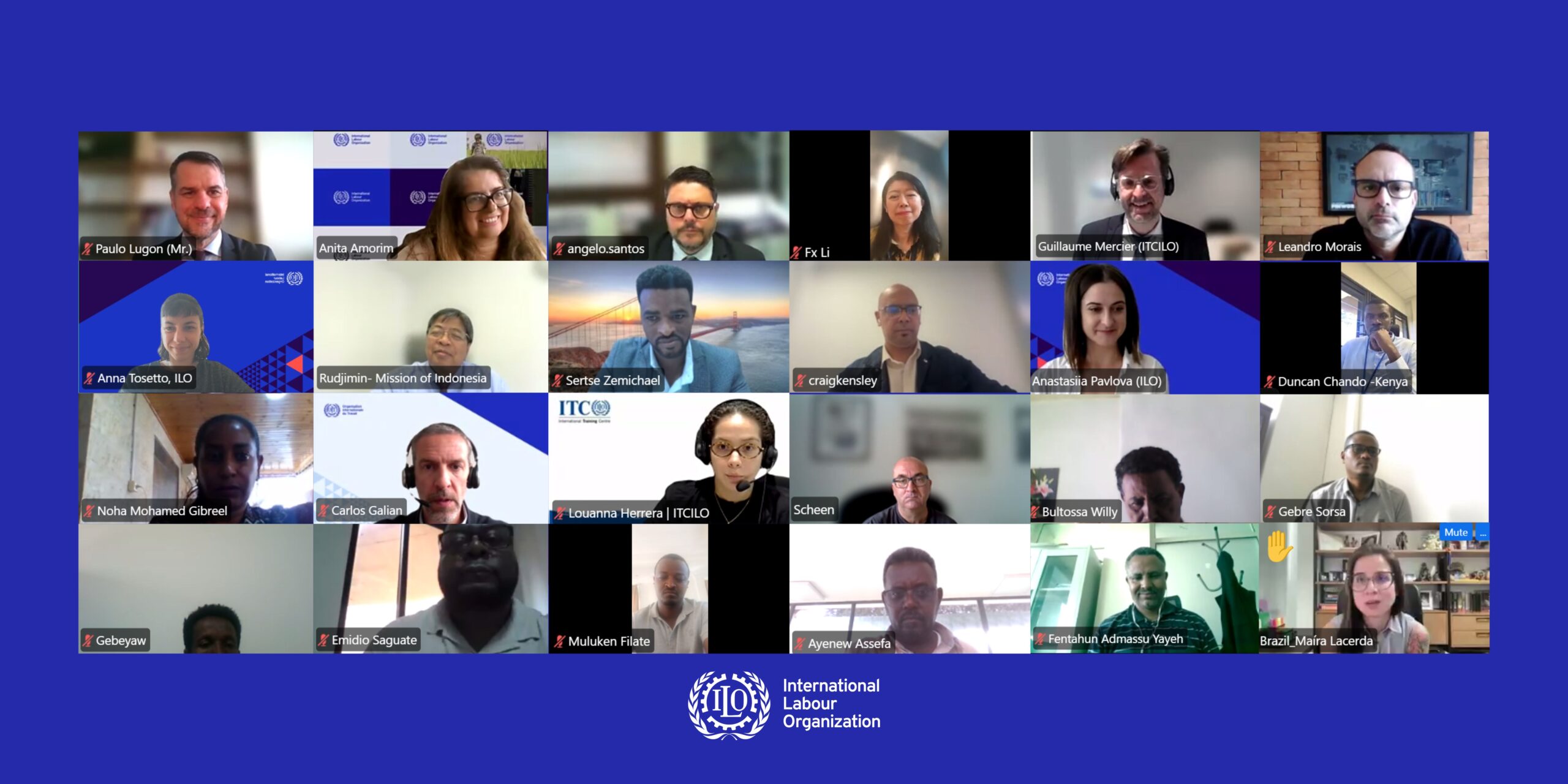
The Knowledge Series was launched on South-South Day, 12 September, and its inaugural substantive session, held online on 29 September, brought together perspectives from the ILO, BRICS representatives and international experts to explore how South-South and Triangular Cooperation can support shared learning and practical responses to changing labour markets.
The Series is conceived as an ongoing learning process rather than a set of stand-alone webinars. It provides a space for countries to share experiences, examine common challenges, identify areas of mutual interest and explore opportunities for practical cooperation. The approach places particular emphasis on peer exchange and on connecting national experiences with opportunities for adaptation and further collaboration.
The inaugural session focused on formalisation and digitalisation, while examining their links with social protection, women’s participation in the labour market, the care economy, skills development and the protection of workers in new and diverse forms of employment. These themes correspond to the four priorities identified under the BRICS Employment Working Group: advancing social security and formalisation of labour markets; enhancing women’s participation and inclusion in the workforce; cooperation on employability, skills mapping and skills development; and leveraging digital technologies to protect all workers, including gig and platform workers.
Opening the session, Guillaume Mercier of ITCILO and Anita Amorim, Head of the Emerging and Special Partnerships Unit and Coordinator of South-South and Triangular Cooperation at the ILO, highlighted the importance of moving from policy dialogue towards practical knowledge exchange and peer learning.
The discussion highlighted the interconnected nature of the four BRICS Employment Working Group priorities. Social protection can support transitions towards formal employment, while women’s participation in the labour market is closely linked to the availability and organization of care. Skills systems need to respond to technological and structural changes in labour markets, while digital technologies create both opportunities and new questions concerning employment relationships and workers’ protection.
The session brought together technical and country perspectives. Paulo Lugon, Executive Director of the Brazilian Institute for Human Rights and Director for the Europe Brazil Office, addressed the rights and international labour standards dimensions of decent work, formalisation and digitalisation. Carlos Galián, ILO Informal Economy Specialist, discussed the links between formalisation, social protection, digitalisation and the care economy, drawing on the ILO’s work to advance the transition from the informal to the formal economy. Mr. Rudjimin, Minister Counsellor at the Permanent Mission of Indonesia in Geneva, responsible for political affairs including labour issues, shared an Indonesian and BRICS perspective, with particular attention to women’s participation, care, digitalisation and South-South cooperation. Angelo Paulo Sales dos Santos, Second Secretary at the Permanent Mission of Brazil to the United Nations Office and other international organizations in Geneva. He shared the Brazilian perspective on where there may be particular opportunities for BRICS peer learning and practical cooperation around formalisation, social protection, women’s participation and digitalisation.
Representatives from Indonesia, China and Brazil also contributed perspectives on opportunities for BRICS peer learning and cooperation. Discussions addressed areas including women’s participation, care, digitalisation, formalisation and social protection, with a focus on how national experiences can move beyond information-sharing towards practical cooperation.
Anastasiia Pavlova (ESPU ILO) also introduced the ILO South-South Meeting Point as a space to document and disseminate country experiences, good practices, technical resources and knowledge products emerging from the exchanges. The platform will help maintain peer-to-peer connections and provide continuity between the live sessions and the knowledge generated through the Series. Feixia Li (ESPU ILO) who was previously working in the Chinese government, reflected on opportunities for peer learning and practical cooperation, including experiences associated with China’s engagement in the BRICS process.
A participatory exercise invited participants to identify experiences they could contribute, areas where they would like to learn from other BRICS countries, and emerging issues for future exchanges. This provided an initial map of priorities and interests to inform the continued development of the Knowledge Series.
The inaugural session reaffirmed the practical value of South-South and Triangular Cooperation as a means of enabling countries to learn from one another, examine how different approaches have been developed and implemented, and consider what could be adapted to their own national circumstances.
Building on the launch on South-South Day and the discussions of the inaugural session, the BRICS South-South and Triangular Cooperation Knowledge Series will continue to provide a space for peer learning, knowledge exchange and the identification of opportunities for practical cooperation around the future of work.