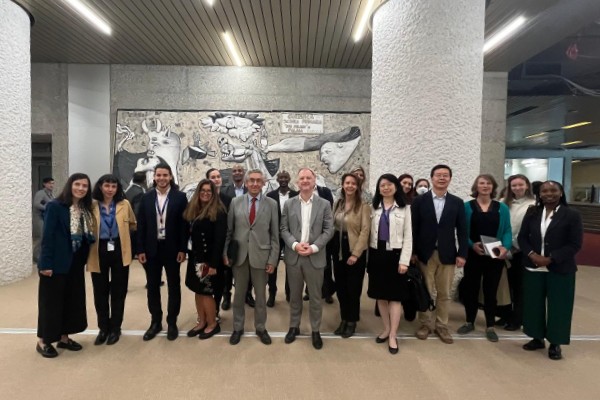
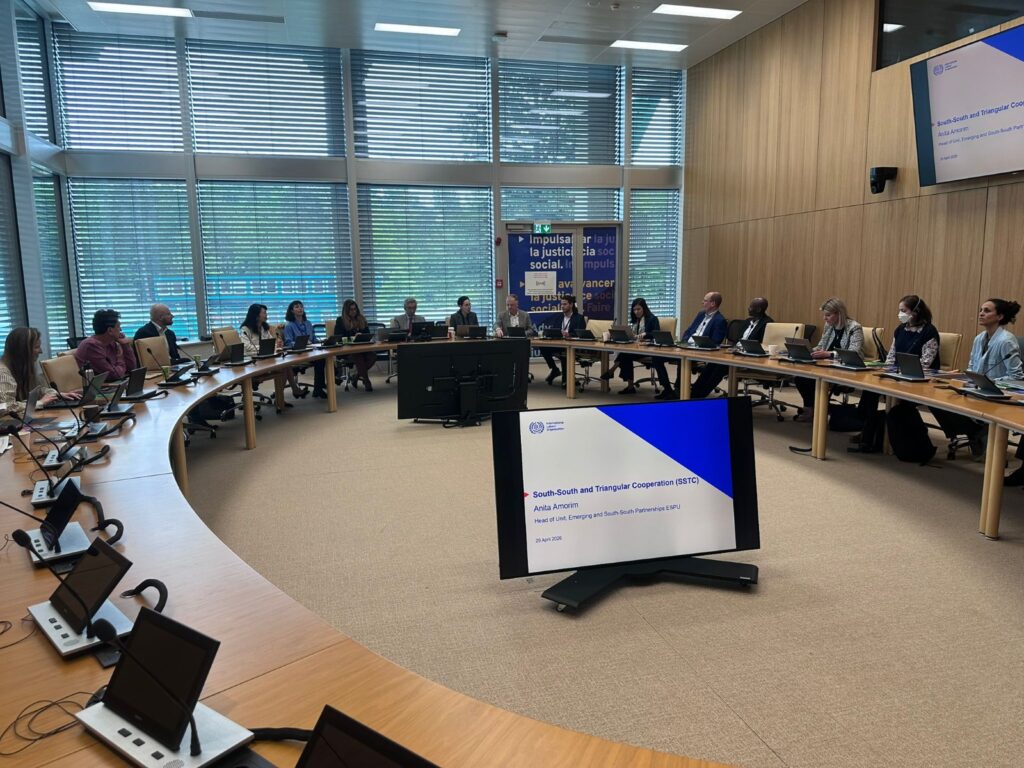
GENEVA (April 29, 2026) — Leading Geneva-based UN agencies and international organizations gathered today at the International Labour Organization (ILO) for the ninth session of the Geneva Partnership Platform (GPP). The exchange focused on the strategic evolution of South-South and Triangular Cooperation (SSTC), exploring how various entities are scaling these partnerships to address future geopolitical challenges.
The session was opened by Diana Chavez, Officer-in-Charge of the ILO’s PARTNERSHIPS Department, who welcomed delegates from ten UN agencies. Diana Chavez emphasized that in a shifting global landscape, SSTC has transcended its role as a technical tool. “This is not just a policy discussion; it is about building the alliances necessary for the 2030 Agenda,” she stated.
The South Centre: a strategic compass for the Global South
The meeting featured a keynote by Dr. Carlos Correa, Executive Director of the South Centre, an intergovernmental organization of 55 member states dedicated to promoting the combined expertise of developing countries. Dr. Correa detailed the Centre’s mission to help the Global South harmonize positions in international negotiations and strengthen the multilateral system.
Highlighting recent research, Dr. Correa presented findings on the development of national SSTC ecosystems, strategies to leverage SSTC for rural development, and the evolving global landscape of SSTC.
Addressing the participants, Dr. Correa noted that while there is still significant work to be done in streamlining South-South cooperation across the UN system, a change is underway. He mentioned the South Centre recent efforts, including a Memorandum of Understanding with the UN aimed at aligning our strategic activities, demonstrating a commitment to ensuring developing countries are not just observers, but architects of global policy.
ILO’s vision: a “circle of equals”
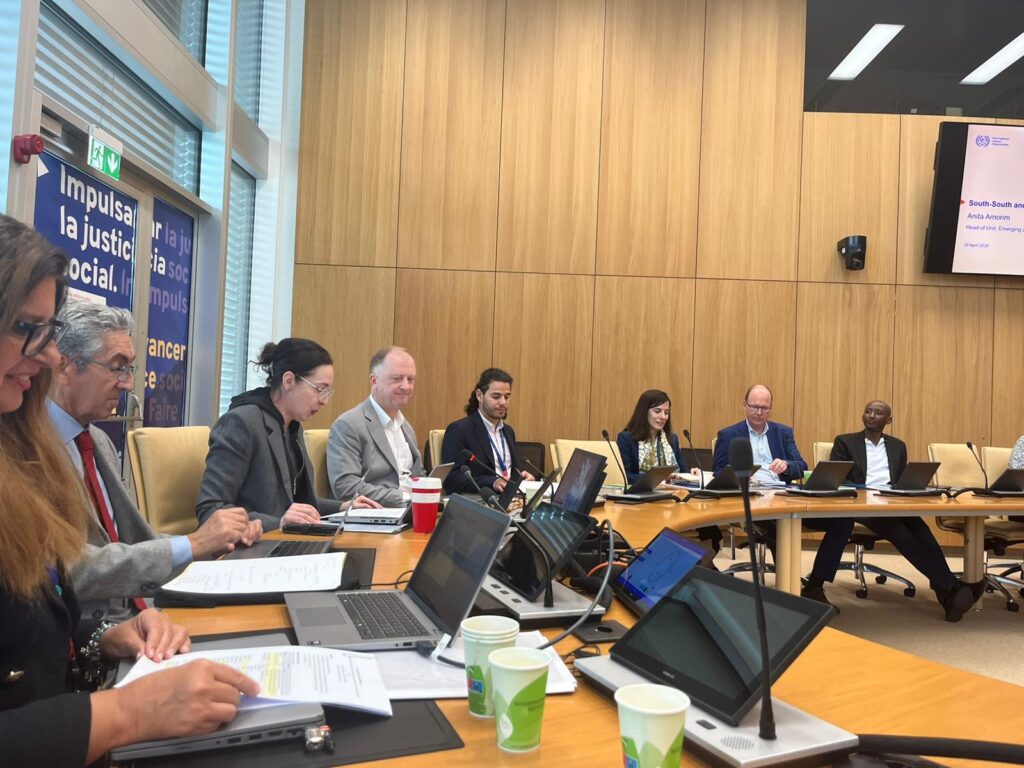
Anita Amorim, Head of the ILO’s Emerging and Special Partnerships Unit, detailed the ILO’s vision for a model of horizontal, constituent-led development.
“Within the ILO ecosystem, we define SSTC as the ‘circle of equals’,” Anita Amorim stated. “It is about finding solutions that share the same DNA. The South must remain in the driver’s seat, moving away from traditional North-South hierarchies toward peer-learning that generates real-world blueprints for decent work.”
Anita Amorim showcased successful initiatives such as the ‘Saber Cuidar’ network in Latin America, which professionalized the care economy across 13 countries, and the CARICOM-ECOWAS interregional partnership on labour migration. She also introduced the South-4-Care Platform, a digital hub for advancing gender equality and social justice.
The Geneva hub: diverse approaches to SSTC
The meeting fostered a rich exchange among various UN representatives, revealing a diverse range of SSTC approaches across the Geneva hub.
There is a visible shift away from traditional donor-driven models toward “in-kind” contributions and country-based approaches, particularly within the BRICS framework. Parallel to this, new models for digital transformation are emerging through acceleration centers that are funded and managed directly by member states. Furthermore, there is a marked increase in capacity-building projects where emerging economies are taking a primary role. This is complemented by a growing emphasis on regional knowledge-sharing as a vital tool to scale climate resilience and protection policies across borders.
The session concluded with a call for continued coordination. As the UN prepares for its System-wide Strategy for 2026–2029, the Geneva Partnership Platform (GPP) remains a vital space for positioning South-South and Triangular Cooperation as a central pillar of an inclusive development model while fostering a unified, Geneva-based effort on SSTC.
About the Geneva Partnership Platform (GPP)
Launched in 2024, the GPP is an informal knowledge-sharing network bringing together over 60 staff members from 30 Geneva-based institutions, including UN agencies and International Financial Institutions. Managed by the ILO, the platform facilitates unbureaucratic cross-agency consultations and expertise sharing in topics related to external relations, partnerships, fundraising and advocacy. The representatives from WHO, UNDR, UN convention on weapons, UNHCR, ILO, WIPO, IFC, South Center (IGO), WMO, UNCTAD, UNOG secretariat attended the meeting.