
GENEVA, 16 September 2026 – The International Labour Organization (ILO), in collaboration with the International Training Centre of the ILO (ITCILO), has launched the BRICS in the World of Work and South-South Cooperation Knowledge Series, bringing together BRICS countries and ILO experts to exchange practical experiences and knowledge on shared labour and employment challenges.
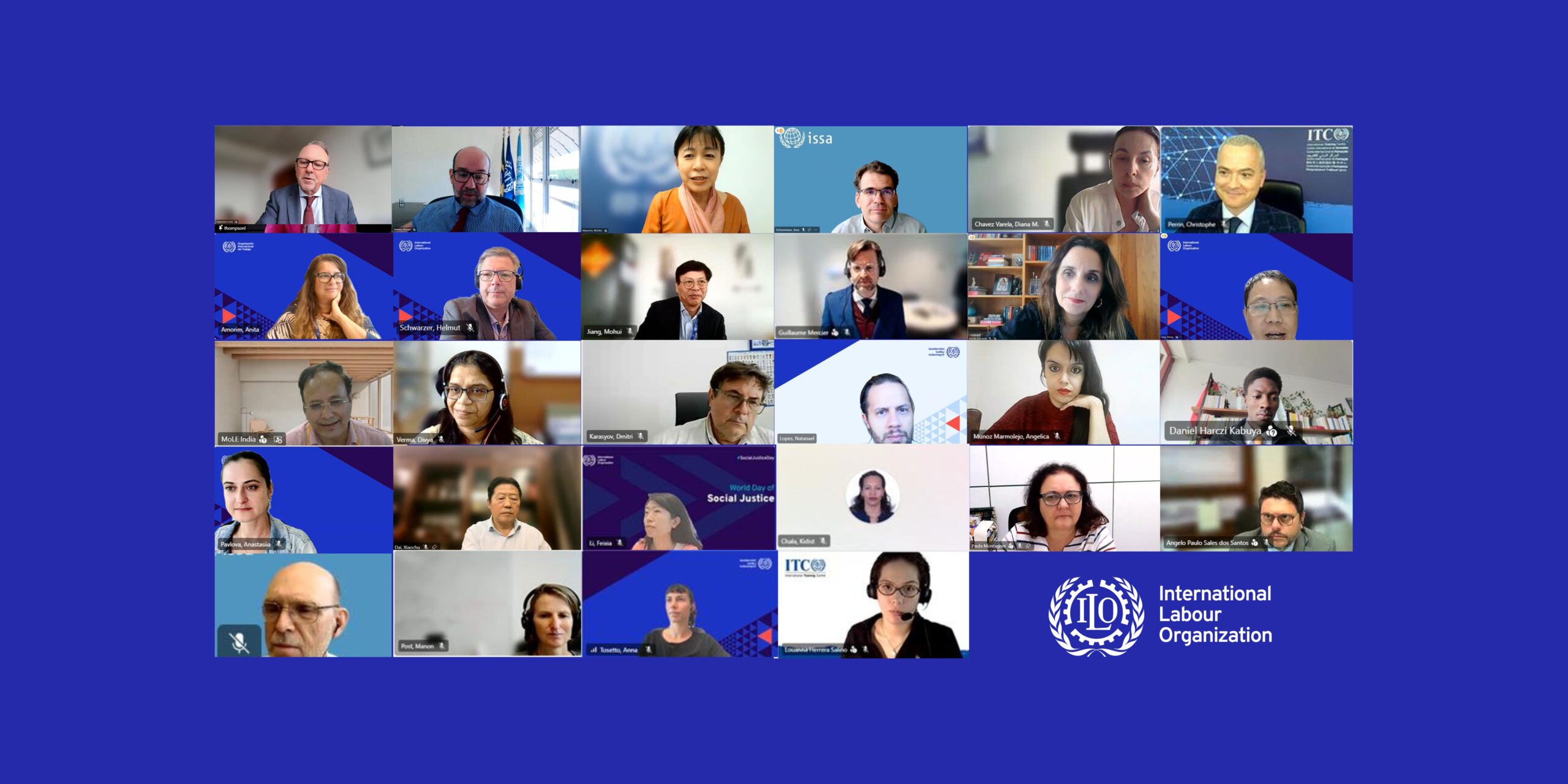
The series was launched during a virtual event held on 16 September as part of the South-South Day celebrations, following the UN Day for South-South Cooperation marked on 12 September. The initiative is organized by the ILO’s Multilateral Partnerships and Development Cooperation Department, through its Emerging and Special Partnerships Unit, in collaboration with ITCILO. Anita Amorim , Head of the Emerging and South South Partnerships unit and Guillaume Mercier moderated the meeting.
The Knowledge Series seeks to provide a space for dialogue, evidence, practice and partnerships, linking the priorities emerging from successive BRICS presidencies with technical exchange and peer learning. Five thematic areas will be explored: social protection and formalization of labour markets; women’s participation and inclusion in the workforce; skills and employability; digital technologies and the future of work; and just transition.
“South-South cooperation is not just about transferring a model from one country to another,” said Frank Hagemann, Director of the ILO’s Multilateral Partnerships and Development Cooperation Department. He stressed that cooperation should enable countries to exchange experience, understand what has worked and what has not, and adapt solutions to their own institutional, economic and social realities.
The initiative builds on priorities developed through the Brazilian BRICS presidency in 2025, when artificial intelligence, the future of work and just transition featured prominently in discussions on labour and employment. Under the Indian BRICS presidency in 2026, the agenda continued to evolve, with emphasis on social protection and formalization, women’s participation, skills and employability, and digitalization.
Speaking from Brazil, Vinicius Pinheiro, Director of the ILO Office in Brasília, highlighted the diversity of BRICS economies and labour markets, while noting the common challenges faced across countries, including informality, inequality, demographic and technological transformation and climate vulnerability. He underlined the value of South-South cooperation as a process of mutual learning, solidarity and adaptation to national realities.
Participants also discussed how cooperation can translate broad commitments into practical solutions. Pinheiro pointed to the potential of exchanges focused on specific challenges, including the links between digitalization and formalization, and the use of digital systems to expand financial inclusion and social protection.
The Indian presidency brought a further emphasis on turning shared priorities into practical cooperation. Divya Verma and Michiko Miyamoto from the ILO CO-New Delhi highlighted the role of knowledge sharing, institutional strengthening and the BRICS Connect initiative, which provides a potential platform for knowledge exchange and continued collaboration. They also noted the recognition of ILO and ISSA technical contributions in the BRICS labour and employment process.
The Brazilian mission to the United Nations represented by Angelo dos Santos reaffirmed the priorities of the Brazilian presidency : artificial intelligence, just transitions and South south cooperation.
Representing India’s Ministry of Labour and Employment, Mr Chaman Guleria, welcomed the Knowledge Series and highlighted South-South Cooperation as a platform for countries to share knowledge, expertise and practical solutions. He also identified BRICS Connect as an important mechanism for capacity building, knowledge exchange and practical cooperation among BRICS countries.
The series will also provide continuity as China assumes the BRICS presidency in 2027. Participants emphasized the importance of carrying knowledge and practical experience from one presidency to the next, rather than starting anew with each annual cycle. The ILO Partnership Department reaffirmed its commitment to supporting this continuity and drawing on ILO expertise in employment, skills and social dialogue.
A key objective of the initiative is to move beyond one-off events. As highlighted during the discussion, the exchanges are expected to generate shared practices and knowledge products that can remain accessible beyond individual meetings. ITCILO will provide a platform for learning, peer exchange and knowledge management, while the South-South Meeting Point will help curate and disseminate materials generated through the series.
“The knowledge series is launched, thanks to this South-South Day,” said Guillaume Mercier of ITCILO at the close of the event, inviting BRICS partners and colleagues to support the initiative and bring relevant participants into the forthcoming exchanges.
The launch brought together representatives of BRICS countries, ILO headquarters and field offices, ITCILO, the International Social Security Association and other partners. It marked the beginning of a programme intended to strengthen South-South knowledge exchange and connect the evolving BRICS world-of-work agenda with practical learning, cooperation and capacity development. The meeting was closed by Christophe Perrin , director of ITCILO, who also thanked ESPU team composed by Anita Amorim, Feixia Li, Anastasiia Pavlova and Anna Tosetto for their unwavering dedication to the promotion of South-South Day and their collaboration with ITCILO.
About the BRICS in the World of Work and South-South Cooperation Knowledge Series
The BRICS Knowledge Series is an ILO–ITCILO initiative providing a platform for dialogue, evidence, practice and partnerships around shared priorities in the world of work. Through thematic knowledge exchanges, technical expertise and peer learning, the initiative aims to support the continued exchange and adaptation of experiences among BRICS countries and strengthen the contribution of South-South cooperation to decent work and social justice.